
- What Is a Standing Seam Metal Roof?
- What Is a Corrugated Metal Roof?
- Standing Seam vs Corrugated: Key Differences
- Cost Comparison
- Which Performs Better in South Florida Weather?
- Installation Differences
- Which One Is Right for Your Home?
- Frequently Asked Questions
- Standing Seam Metal Roof Installers In Coral Springs
Roofing in the South Florida climate can be a challenge since there are so many factors that the weather can throw at you. Hurricane season is on the horizon. From extreme heat, high humidity, salty air, torrential rainfall, and regular hurricane-force winds, the threat to your roof’s existence is constant. To mitigate these threats, the roofing industry has developed multiple types of roof coverings that range from the cheap and cheerful asphalt shingle to modern copper tiles.
For a robust, dependable solution, many homeowners are turning to one of two metal varieties: corrugated and standing seam metal roofs. In this guide, we will “cover” the topic so that you can make the best decision for your home.
What Is a Standing Seam Metal Roof?
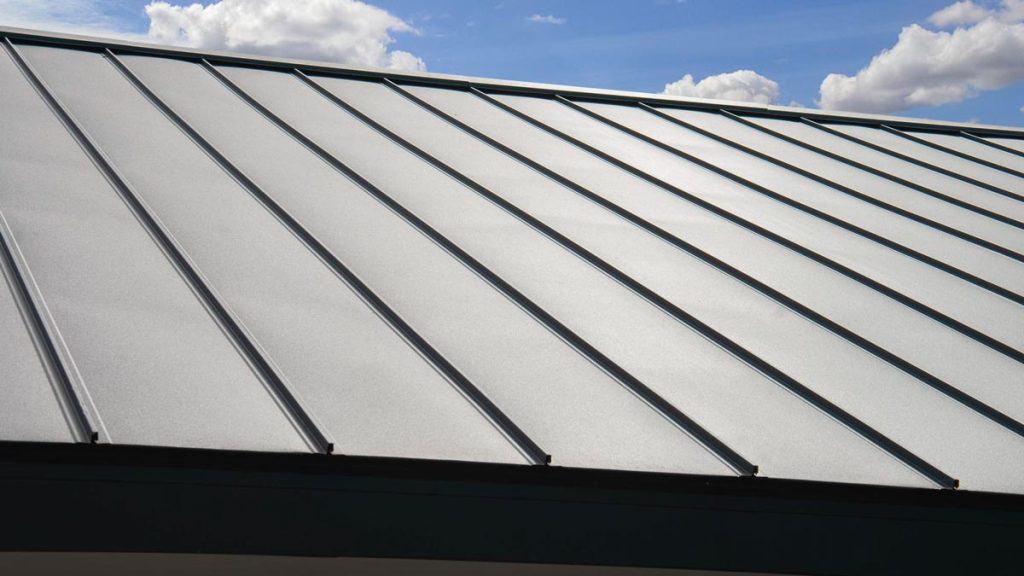
The standing-seam metal roof is an attractive, sleek, and modern style that fits perfectly into the suburban South Florida landscape. The modern look is achieved by an extremely uniform aesthetic shaped by the vertical orientation of panels to facilitate water flow towards the roof edge.
The interlocking metal panels are joined by a seam and fastened to a clip attached directly to the roof deck and concealed from the outside. This flexible roofing system is also called a floating roof system, as the expansion and contraction of the roof surface does not affect the fasteners, virtually eliminating the risk of leaks.
What Is a Corrugated Metal Roof?
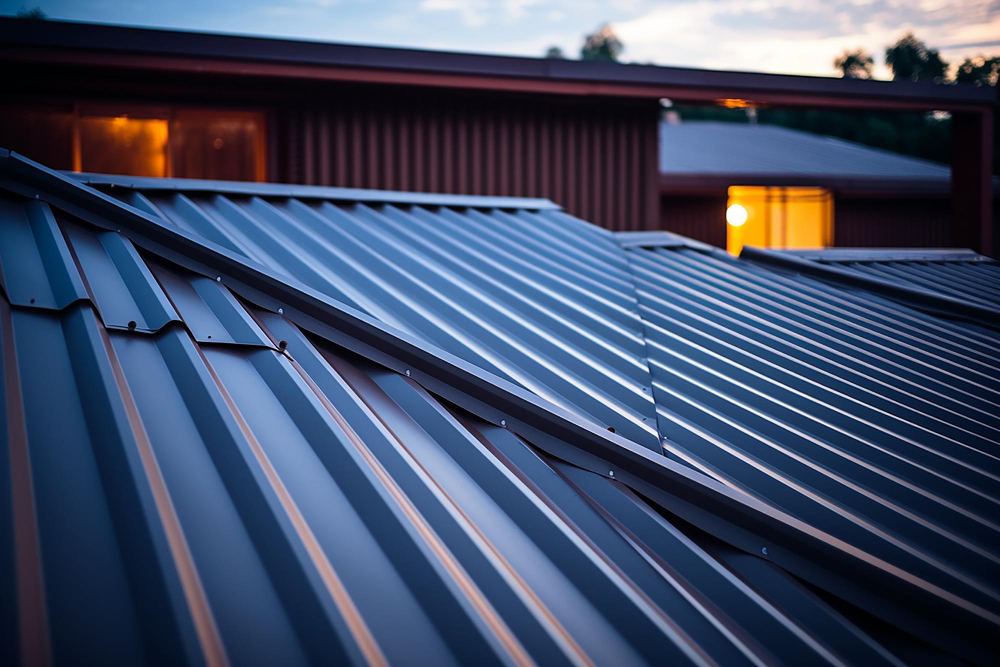
Corrugated metal roofing is the style of roof most synonymous with rural or industrial buildings. Each panel has a wavy design that is either sine wave or sawtooth in profile. Picture a large dairy milking shed or a warehouse for a logistics company, and you’ll have a decent picture.
Corrugated metal roofs make use of an exposed fastener system where the screws are driven through the panel into the roof deck below. Initially, these roofs will prevent leaks from forming, but over time, the expansion and contraction of the panels on the roofs will lead to the holes where the screws were driven being enlarged. This, in turn, eventually leads to leaks that seep into the roof deck below and usually involve a roof replacement project in the future.
Standing Seam vs Corrugated: Key Differences
When comparing any two types of roofing, the key differences generally fit into the following categories:
- Budget
- Maintenance needs
- Aesthetic considerations
- Durability and lifespan
Type of Fastener Used
As briefly mentioned above, corrugated metal roofs are a traditional screw or nail-fastened solution where the roof panel is driven directly into the roof deck or purlins beneath. This is known as an exposed fastener because it is exposed directly to the elements. A standing seam metal roof makes use of a floating, concealed fastener system where the clip tab is crimped into the seam itself, keeping the clip concealed completely from the outside world.
Gauge or Material Thickness
The gauge of a metal panel can seem counterintuitive at first; the smaller the number, the thicker the gauge. The reason behind this is that in metal manufacturing, a metal billet is fed through an extruder to make a continuous coil, from which the roof panels are then formed.
Historically, each time a billet was fed through the extruder, this was known as a gauge. Fewer passes through the extruder means thicker sheets, and in the case of standing seam metal roofing, the gauge is usually 22 or 24, while for corrugated metal roofing, it is considerably thinner at 26 or 29 gauge.
Aesthetic Appeal
In terms of design standards and modernity, the standing seam metal roof is an outright winner with a clean, sleek look that epitomizes modern contemporary architecture so common in many of today’s high-end homes. Corrugated metal roofs tend to have a more rustic, traditional style that still appeals to certain minds. Beauty is, as they say, in the eye of the beholder.
Durability & Lifespan
Since both roof types are made of metal, they are more durable than some other options on the market. In the case of standing seam metal roofs, the metal panels can last for anywhere from 50 to more years. This is all down to the concealed fastener system. This is an area where corrugated roofing is inferior, as the many holes that are drilled into the roof panels create more opportunity for rust and leaks to develop. These roofs typically last less than 25 – 40 years.
Maintenance Requirements
In South Florida, proximity to the coast will necessitate rinsing off either type of roof surface periodically from the salt spray. As far as standing seam metal roofs go, they are essentially a maintenance-free system. Since the clips are concealed from the corrosive forces, they will remain unperturbed.
Corrugated metal roofs, in contrast, do require maintenance as the rubber washers that prevent water ingress to the roof deck perish over time and exposure to the sun’s UV rays. They will need to be replaced eventually and should be checked every 5 – 7 years. If you have a corrugated metal roof, it may be necessary to re-screw the entire roof with larger screws to account for the increase in the original hole size.
Watertightness
Corrugated roofs, as we have discussed, are less watertight since they have many holes drilled into the roof surface. Each hole is a potential leak point, and since there are many of them, the odds of one not being a perfect seal increase with each additional screw. Standing seam metal roofs are the most watertight roofs on the market since there are no holes in the panel, which means that the roof covering is a single continuous surface with no points of ingress. The crimped seams are also about 2 inches high, which means if there is a torrential downpour, the seam’s crimped edge will still be above the water level.
| Standing Seam Metal Roof vs Corrugated Metal Roof | ||
|---|---|---|
| Aspect | Standing Seam | Corrugated |
| Fastener Type | Concealed Under Panel | Exposed |
| Material Thickness | Usually 22 or 24 gauge (Thicker) | Usually 26 or 29 gauge (Thinner) |
| Aesthetics | Modern, Clean, Sleek | Rustic, Traditional |
| Lifespan | 50 years and over | 25 – 40 years, depending on corrosion |
| Maintenance Requirements | None except periodic rinsing of salt if close to the coast | Inspection of roof screws every 5 -7 years. Re-screw jobs likely |
| Watertightness | Most water-tight roofing option | Prone to leaking over time. |
Cost Comparison
Right off the bat, standing seam metal roofs cost around 40% – 60% more than their corrugated counterparts. There is a premium on the gauge of the metal used as well as the specialized hardware for the concealed clips. The labor cost is also higher for the standing seam metal roof installation process, as it is more involved.
As mentioned above, in terms of ongoing maintenance costs, corrugated roofs will cost more over the long run since they require far more maintenance and repair in relation to standing seam metal roofs.
Which Performs Better in South Florida Weather?
South Florida has the triple weather threat of heat, water, and wind. All 3 of these can be destructive elements in their own right, but in South Florida, the struggle is real for metal roofs.
Due to the exposed fastener system on corrugated metal roofs, the threat of heat expansion is the first weakness for a corrugated metal roofing system. The expansion and contraction of the metal sheet around the fastener increase the size of each screw hole, which renders the rubber washer ineffective to stop water leaks. Once the water manages to seep into the hole, rust begins to corrode away some of the metal sheeting. The corrosion is accelerated by the salt content in the air, and the washers are continually weakened by the sun’s UV rays.
In terms of South Florida being a High Velocity Hurricane Zone (HVHZ), the uplift resilience of standing seam metal roofs is second to none because of the floating clip system that allows for movement and shifting of panels. Some systems are rated for wind uplift where speeds are in excess of 150mph.
At ABC Roofing Corp., our experience has shown us that standing seam metal roofs hold up much better and are the superior option for metal roofing in South Florida’s challenging climate.
Installation Differences
For corrugated metal roofs, the installation process is a known entity with the roofing industry consisting of many roofers who have experience in installing these roofing systems. The panels are lined up on the roof deck and attached using either roof screws or nails. They are attached directly to the roof deck, piercing the underlayment, which creates another point of weakness for leaks.
The installation process for standing seam metal roofs is more involved and requires special tools as well as experience in using them. Panels need to be aligned, and roofers require the necessary knowledge on how to attach the specific floating clip system.
Which One Is Right for Your Home?
We’ve decided to put this information into a helpful table that will highlight the salient criteria for your decision on which metal roof to install.
| Standing Seam if… | Corrugated if… |
| The home you’re building is your forever home | You want fire-resistant roofing, but have a tight budget |
| You live in a High Velocity Hurricane Zone (HVHZ) | Looking for a specific rustic aesthetic |
| Modern aesthetics and resolve value are high on your priority list | It’s an outbuilding that you’re putting up |
| You plan on installing solar panels | You plan on moving on in 10 – 15 years |
Frequently Asked Questions
Is Corrugated Metal Roofing Good For Hurricane Zones?
While corrugated metal roofing is considered stronger than most other shingles, it is not an ideal choice for a High Velocity Hurricane Zone. Since the gauge is thinner and the panels are pinned to the roof, this makes them more inflexible, and they are likely to tear away from the structure in very strong winds. With standing seam metal roofing, the more robust and flexible clip system allows the roof to move with the wind in the same way that high-rise buildings do in strong winds. Flexible structures stand, rigid ones break.
How Long Does A Corrugated Metal Roof Last Vs. Standing Seam?
As we have discussed, the fastening system makes all the difference to these types of roofs. Corrugated metal roofs will give you a maximum of 25 – 40 years while standing seam metal roofs will give you in excess of 50 years service, most probably more.
Can You Walk On A Standing Seam Metal Roof?
Yes, you can walk on standing seam metal roofs, but it’s better to leave that up to the professionals. If you must walk on the roof, please ensure that you have a safety harness or other safety equipment to keep you from harm.
Does A Metal Roof Increase Home Value In Florida?
The answer is most certainly yes. The savings that you can get from your insurance premiums as a homeowner are added value on their own. Realtors in South Florida report that the price of an average house with a standing seam metal roof can add up to 5% to the sale price over one with asphalt shingles. We’d say that’s extra value! It’s also important to understand the value you will save in maintenance over the long term as well.
Is Standing Seam Louder In The Rain?
In short, no, since to comply with South Florida’s uplift requirements, all roofs need to have a proper waterproof deck with underlayment, and these tend to assist with keeping the sound down. The loud metal roof sound associated with rain is usually in a farm or barn context, where there is no need for decking and underlayment.
Standing Seam Metal Roof Installers In Coral Springs
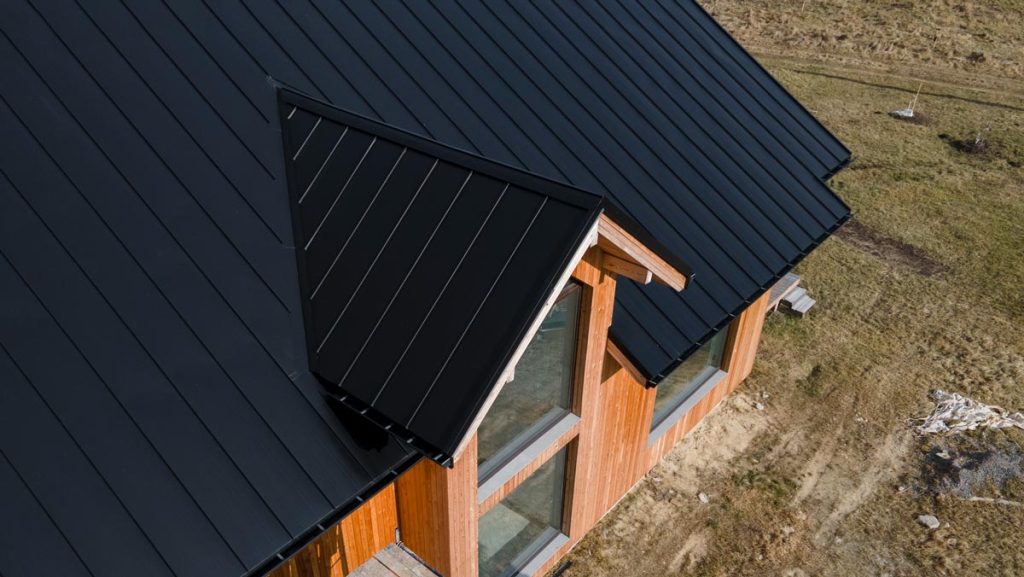
At ABC Roofing Corp. we have dedicated many hours to becoming the premier installers of standing seam metal roofs in Jupiter & Coral Springs, Florida. Our team of dedicated and experienced technicians has honed their skills in order to fit your roof leak-free and with the utmost precision. If you are interested in installing a metal roof for your home or business, call us at 954-344-4622.
Related Articles
For Roofing Contractors You Can Trust, Call ABC Roofing!
Having to replace or repair your roof seems like a large task to tackle, after…
Read More
Common Roof Issues Uncovered During An Inspection
A regular roof inspection is the best way to maintain the integrity and overall condition of your…
Read More
How to Enhance Your Home’s Curb Appeal with Metal Roofing
South Florida homeowners take careful steps to improve their home’s curb appeal. You strategically manicure…
Read More
Preparing Your Roof For A Hurricane
Living in an area prone to hurricanes means that you need to be prepared for…
Read More