
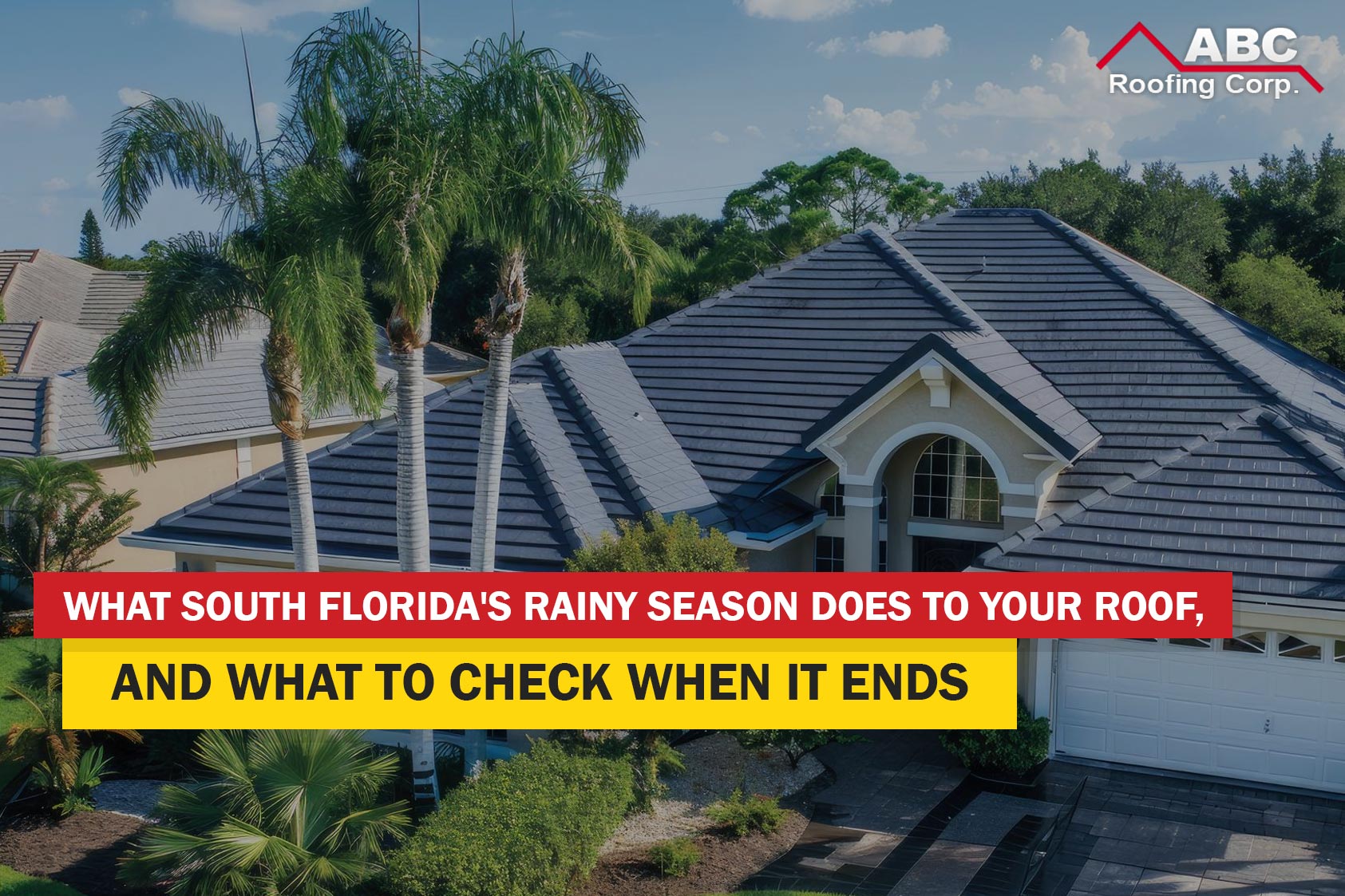
South Florida roofs face demanding conditions for much of the year. Between intense sun, high humidity, heavy afternoon rain, and periods of standing water, your roofing system is constantly exposed to elements that can gradually affect its condition and performance.
While hurricane preparation and storm damage tend to get the most attention, everyday exposure can also take a toll on your roof. Thermal expansion, moisture, and high ultraviolet (UV) radiation can contribute to deteriorating roofing materials, damaged sealants, drainage issues, and other problems that may not be immediately visible from the ground.
That’s where regular roof maintenance becomes important. Identifying minor issues before they develop into more extensive damage can help protect your roofing system and reduce the risk of unexpected repairs. In this guide, we’ll look at some of the signs of roof wear South Florida homeowners can watch for, what you can safely check from the ground, and when it’s time to call a professional roofer.

Understanding the Difference: Storm Damage vs. Cumulative Wear
When South Florida homeowners think about roof damage, hurricanes and severe storms often come to mind first. High winds can loosen or remove roofing materials, falling branches can cause impact damage, and wind-driven rain can expose vulnerabilities in a roofing system.
However, roof damage doesn’t always happen during a single major weather event. Your roof is also exposed to months and years of sun, heat, moisture, and heavy rainfall that can gradually affect roofing materials. Understanding this cumulative wear can help homeowners recognize potential problems before the next major storm arrives.
South Florida Weather is Uniquely Damaging to Roofs
South Florida’s combination of intense sunlight, high temperatures, humidity, and frequent heavy rainfall creates challenging conditions for residential roofing systems. Over time, repeated exposure can affect everything from shingles and tiles to sealants, flashing, and underlayment.
Intense UV Exposure & Temperature Changes
South Florida roofs are exposed to intense sunlight and high temperatures for much of the year. As roofing materials heat up during the day, they expand. When temperatures drop or an afternoon rainstorm cools the roof, those materials contract.
Repeated expansion and contraction can contribute to the gradual deterioration of roofing materials. Depending on the type and age of the roof, homeowners may eventually see cracked or deteriorating sealants, granule loss on asphalt shingles, or other signs of weather-related wear.
Standing Water & High Humidity
Heavy rainfall can expose drainage problems on roofs where water does not move away efficiently. Low spots, clogged drainage areas, and other issues may allow water to remain on portions of the roof longer than it should.
Combined with South Florida’s high humidity, prolonged moisture can contribute to deterioration of roofing materials and may increase the risk of leaks, mold, or damage to the underlying roofing system if existing vulnerabilities are present.
Algae & Organic Growth
The same constant wet environment and tropical warm temperatures mean your roof becomes an ideal place for microorganisms. Moss, lichen, and algae love a South Florida roof that is always moist and just the right temperature for a thriving ecosystem. Moss roots and the tendency of plant life to hold onto moisture mean that the water never leaves your roof. The roots grow into the sealants and linings, tile pores, and contribute to lifting edges.
These small incremental assaults on the roof of your home weaken it to a point where if they are not inspected by a qualified roofer for critical repair work, you could end up spending thousands on a reroof when the next hurricane rolls by.
Individually, these conditions may not cause an immediate roofing emergency. Over time, however, cumulative exposure can weaken roofing materials and make existing vulnerabilities more significant. Regular roof maintenance gives homeowners an opportunity to identify developing problems and address necessary repairs before they become more extensive.
Inspect Your Roof From The Ground: Checklist
Important Safety Note: Roof maintenance should be taken seriously. Never attempt to climb onto your roof or conduct roof inspections yourself. Roof coverings are slippery when wet, extremely dangerous, and easily damaged if you don’t know what you’re doing. Always hire a professional roofer with experience, training, and the necessary equipment to conduct a roof .
You can achieve a very effective DIY roof inspection from the ground by using nothing but your eyes, a pair of binoculars, or even a camera with a decent zoom function.
Let’s dive into what it is that you can inspect from the safety of the ground:
Trapped Debris: Valleys & Drainage Ports
Trace with your eyes to where two roof surfaces intersect and create a V-shape or valley. Valleys can also be created around areas where there is a slope transition from low-slope to high-slope.
You can look for:
- Accumulated palm fronds
- Tree Leaves
- Twigs and other debris resting in the channels
It’s important to look in these areas as they are designed as waterways for high-volume flow to channel the water towards the gutters when it rains. Built-up debris essentially acts as a dam and prevents water from getting to the gutters. The net result is pooled water, which will create rot, damp, mold, and eventually, leaks.
Displaced or Cracked Tiles & Lifted Shingles
Look over the main flat surfaces of your roof where it is tiled or shingled. Make sure to look from various vantage points in your yard.
Tiled Roofs
If you have a tiled roof, have a look for any of the following issues:
- Cracked or chipped tiles
- Tiles that seem to have shifted or slid down
- Missing tiles
- Gaps and breakages in the ridge cap that runs along the top of the roofline
Shingle Roofs
Shingle roofs are some of the most common roof coverings in South Florida, so if you have one, then look out for:
- Curling shingle edges
- Lifted tabs
- Missing shingles
- Uneven patches where granules have almost completely disappeared
Tiles are a tough, weather-resistant outer shield, but shingles rely on tight strips of sealant to keep your roof dry. Cracked tiles or lifted shingles can expose portions of the roofing system to additional moisture and should be evaluated to determine whether repairs are needed.
Gutters: Sagging, Broken, Overflowing
Another important aspect of roof maintenance is your gutter system. If you do have a home with gutters, it’s good to check them both before and after a rainstorm as well as on a sunny, clear day.
Look out for the following warning signs:
- Gaps between fascia board and gutter trough
- Visible sagging of gutters on long horizontal runs
- Rusted gutter hardware
- Water pouring over sides and not flowing down spouts
Clogged gutters force water directly back up along the edge of the roof, known as the eaves. Standing water then saturates fascia boards, soffits, and underlayment edges. The wood rots in an area where you can’t see and can even become an entry point for other roof-dwelling pests.
What To Look For From Inside Your Home
It’s important to bear in mind that as part of your roof maintenance inspection, you must look for signs that may be invisible from outside and only visible from inside your home. The earliest signs of roof decay are usually revealed more readily by looking inside your living space, crawl space, or attic.
Staining on Ceilings and Exterior Walls
It’s a good idea to walk through every room on the top floor of your home and inspect the ceiling lines and the top corners of exterior walls.
Specifically look for:
- Yellow, brown, or grayish blotches that look like stains
- Streaks that look like water has run down the wall
- Damp spots, bubbling paint/drywall
Stains are all the proof you need that water has already breached the outside protective layers of your home. You’ll have to contact your local roofing specialist for a leak repair.
In a South Florida home, this means that water has made its way through:
- Outer roof material
- Underlayment
- Roof deck
- Insulation
Checking the Attic Space
If your home has accessible attic space, using a bright flashlight, do not get into the attic but just conduct a visual inspection through the access hatch. See if there is anything obviously wrong.
After doing that, turn your flashlight off and see if there are any areas where light is leaking through into the attic. If you can see light, that means water will find its way in through there too. The areas to pay special attention to are around chimneys, roof vents, and valleys.
Next, you can inspect the under sheathing and rafters, looking specifically for:
- Dark moisture stains
- White mineral deposits left behind by dried water
- Damp and compressed insulation
One of the most tell-tale signs for a roof leak in the attic will be a damp, musty odor that occurs when there is ongoing moisture retention and resultant mold growth.
An Aging Roof: When Visual Inspections Aren’t Enough
Checking your roof from the ground can help you spot visible signs of wear, but not every roofing problem is easy to see. As a roof ages, issues can develop beneath the surface or in areas that homeowners cannot safely access. That’s when it’s important to have an experienced roofing professional evaluate its condition.
Tile Roofs
While tile roofs are an excellent long-term choice for roof coverings, they are typically limited by how long the protective underlayment lasts. So for a tiled roof, you typically have 20-25 years before you need to consider a reroof for the underlayment.
Shingle Roofs
With the high temperatures and frequent downpours in Florida, even the high-end architectural shingles that are used typically will only last 15 to 20 years.
Metal Roofs
Metal roofing is a durable and popular option for South Florida homes and can often last 40 to 70 years or more with proper installation and maintenance. It can handle intense heat, heavy rain, and strong winds, making it well suited to the local climate.
As a metal roof ages, fasteners, protective coatings, seams, flashing, and other components should be checked for signs of deterioration, corrosion, or movement. A professional evaluation can help determine whether maintenance or repairs can address these issues or whether the roofing system is approaching the point where replacement should be considered.
Roof Maintenance Action Plan
Up until now, we have described the cursory and safe ground-based inspections for your roof maintenance. Now that the rainy season has ended, your roof has done its job, but it needs some TLC, a little downtime, some pampering so that it can do its job for you again next year. You can take your findings and put them into a simple, readable checklist for your reputable South Florida roofer.
It can look similar to this:
Valley & Drainage Clearing – Safe and professional clearing of:
- Palm debris
- Sediment buildup
- Leaves and other litter
- Ensure clean and clear valleys and low-slope drains
Flashing Inspection – Inspection, corrosion, and integrity check of all sealants around:
- Skylights
- Plumbing stacks
- Roof vents
Tile & Shingle Repair – For the problem areas that your inspection revealed:
- Replace cracked, chipped, and damaged tiles
- Resecure lifted shingle tabs and shingles
Gutter Alignment & Cleaning
- Tighten fascia fasteners
- Clear gutters to ensure open flow away from eaves
Attic Roof Deck Audit – Ask your roofer to:
- Evaluate roof sheath moisture levels if you noted potential problems
Know Your Inspection ABC’s, Then Call ABC Roofing
For homeowners from Jupiter to Coral Springs and communities throughout South Florida, ABC Roofing has provided professional residential roofing services for nearly 40 years in South Florida. As a family-owned roofing company, we understand the demands South Florida weather places on your roof and the importance of identifying signs of wear before they develop into larger problems.
While there are plenty of things you can safely look for from the ground, a professional roofer can take a closer look at areas you may not be able to see. If you notice signs of roof wear, water intrusion, damaged roofing materials, or simply have concerns about the condition of your roof, ABC Roofing is here to help.
Protect your roof with regular maintenance and timely repairs. Call us at 954-344-4622 to schedule your FREE roof estimate and find out what your roof needs to stay protected.
Related Articles

Things To Consider When Asking For A New Roof Quote
How do you know you’re getting the best roofing quote? Getting a new roof quote…
Read More
A Guide To Commercial Roofing Systems
There is a common misconception that all roofs are created equal when in reality there…
Read More
New Clamp Technology Expands Wind Resistance for Metal Roofing
Metal roofing has become increasingly popular over the years. They are durable, affordable, and are…
Read More
What Quality Roofing Is Best For My Home?
Whether you’re looking for quality roofing for a new or existing home, it’s important to…
Read More