
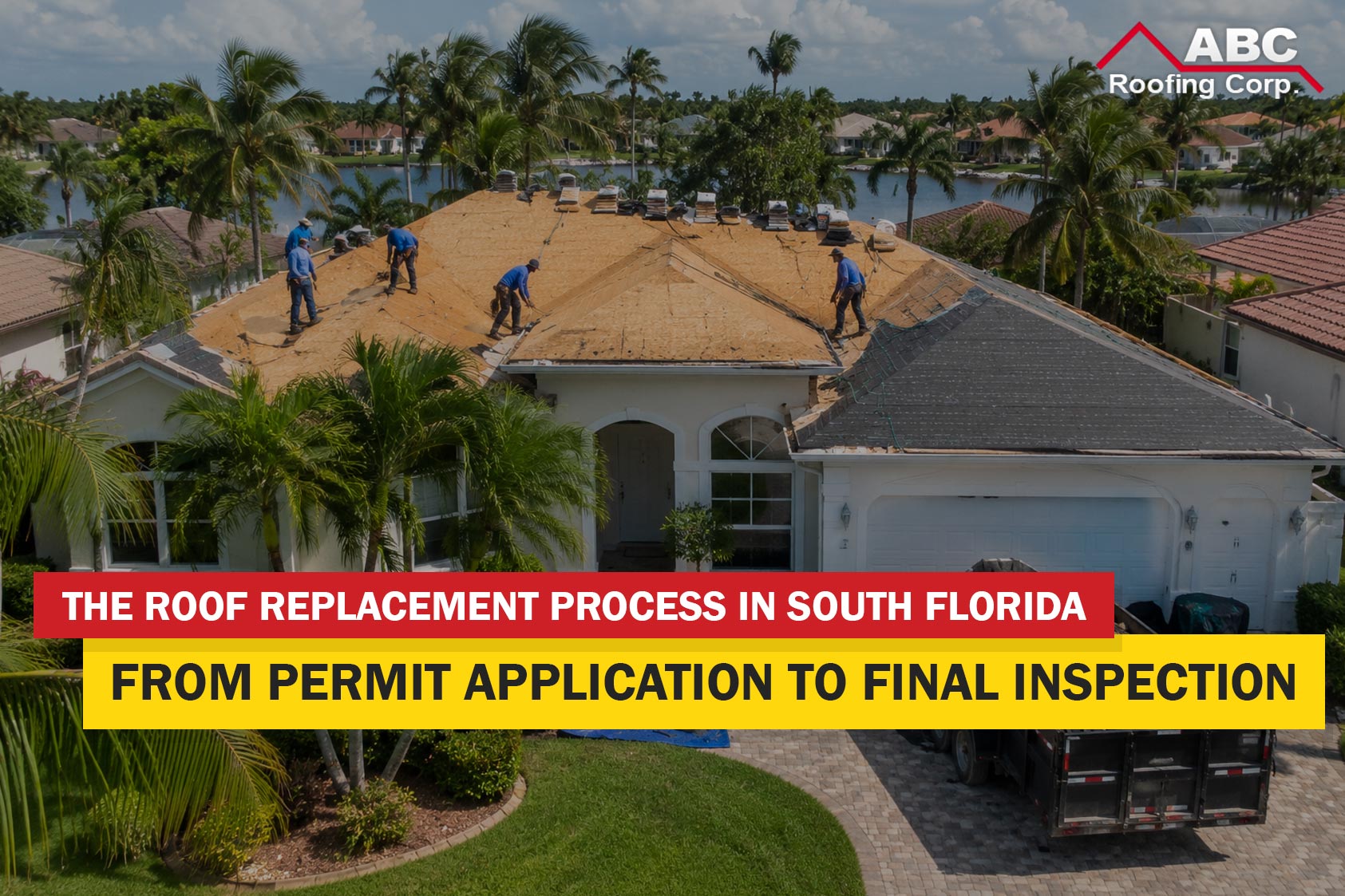
-
The Multi-Step Roof Replacement Process
- 1: Initial Roof Inspection And Assessment
- 2: Signing The Contract And Choosing The Materials
- 3: Permit Application
- 4: Material Ordering And Delivery
- 5: Preparation Of The Job Site
- 6: Tearing Off The Old Roof
- 7: Inspection Of The Roof Deck And Installation Of New Decking (If Needed)
- 8: Installation Of Underlayment And New Roofing System
- 9: Municipal Inspection
- 10: Final Cleanup And Project Completion
- Why Should Homeowners Only Choose Reputable Roofing Contractors?
- Roof Replacement With ABC Roofing Corp.
South Florida roofs are exposed to very harsh weather conditions. Whether it’s endless UV exposure and high humidity or torrential rains and hurricane-force winds, all roofs are being constantly pounded by the elements. With this amount of stress, homeowners understand that even the most durable roofing systems will, over time, weaken and require replacement.
Understanding that the roof replacement process is complex; only an expert roofing contractor can help homeowners navigate the multi-step roof repair/replacement process from permit application to final inspection.
The Multi-Step Roof Replacement Process
Professional roofing contractors understand that homeowners feel overwhelmed when faced with a roof replacement. There are many questions around permits, timelines, materials inspection, and costs that make the process appear complex.
Here are 10 steps that a reputable roofing contractor will follow with precision and professionalism:
- Initial roof inspection and assessment
- Signing of the contract and choosing materials
- Permit application and approval
- Material ordering and delivery
- Preparation of the job site
- Tearing off the old roof
- Roof deck inspection and installation of the new roof deck (if needed)
- Installation of the underlayment and new roofing system
- Municipal inspections
- Final cleanup and project completion
1: Initial Roof Inspection And Assessment
Any roof replacement must begin with a thorough inspection. This vital step allows the roofing professionals to evaluate the current condition of your roof and determine the extent of the work that needs to be done.
During the roofing inspection, the contractor will:
- Assess the condition of all the roofing materials, including shingles, tiles, flashing, ventilation systems, and underlayment
- Carefully inspect the whole roof for any signs of leaks and/or water damage
- Do a thorough inspection of the Integrity of the roof deck
- Assess for mold, rot, or pest presence/damage
2: Signing The Contract And Choosing The Materials
Once the homeowner has decided to proceed with a roof replacement, the contractor will advise on roofing materials. A contract is then drawn up that will include the cost of the roof replacement, including the cost of the materials chosen. Your contractor will recommend materials that meet your budget and comply with the local building codes.
Once materials have been chosen, the homeowner will sign the contract. The contract will be clear and transparent, protecting both the homeowner and the contractor. ensuring that expectations are aligned from the beginning.
The contract will outline:
- The scope of work that will be carried out
- The material that will be used, and the cost thereof
- A project timeline
- The payment schedule
- Warranty details that include workmanship and materials
3: Permit Application
In South Florida, all roofing projects require permits from local municipalities. This is a crucial step that ensures that all work completed complies with the Florida Building Code regulations.
The roofing contractor will typically handle the permit process on your behalf.
This process will include:
- The submission of detailed plans and specific
- Proof of licensing and insurance
- The payment of permit fees
- All coordination with local building departments
Approval of the permit may vary depending on the municipality, and the process may take longer if all documents are not accurate and complete. An experienced contractor will streamline the process.
4: Material Ordering And Delivery
Once the permits are approved, the contractor will order the materials and schedule a delivery. Materials are typically delivered to the property and put up on the roof. The contractor may have to coordinate placement and storage to minimize disruption of the household’s daily routine.
5: Preparation Of The Job Site
Before any work can begin, the roofing team will prepare the property to protect it during the replacement process.
Protection of the property may include:
- Covering any pools, outdoor furniture, and landscaping
- Setting up safety barriers to prevent injury at the job site
- Placing appropriate trash removal systems for debris removal
- Ensuring safe access for both workers and the equipment
Proper preparation of the site prevents unnecessary property damage and ensures a safe work site for contractors and residents.
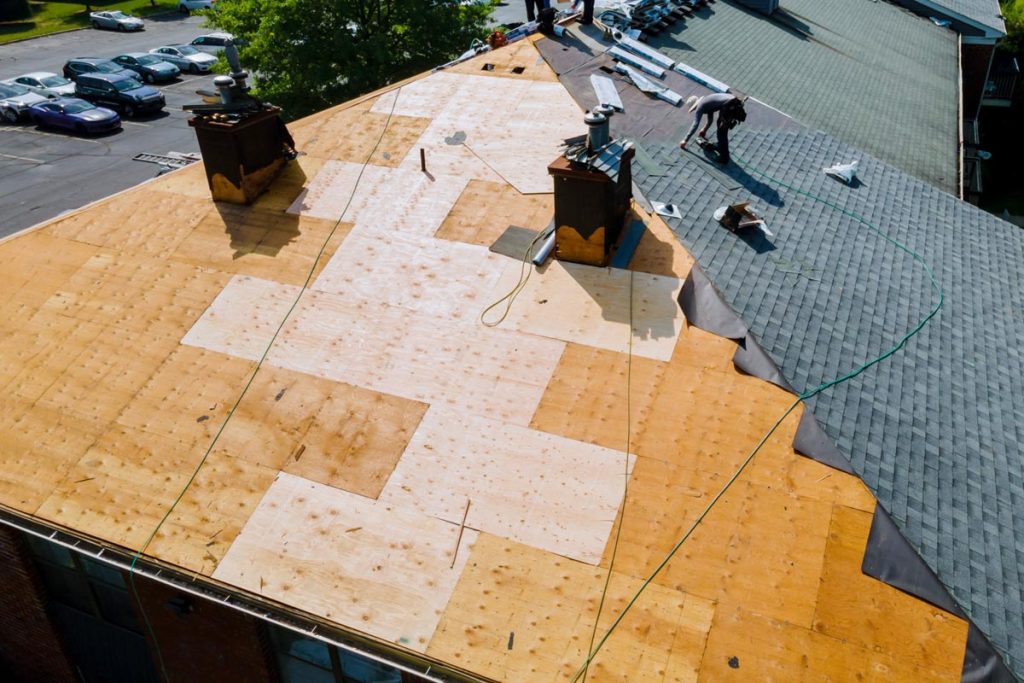
6: Tearing Off The Old Roof
This step involves stripping away all the old roofing materials right down to the roof deck.
This stage is vital as it allows contractors to:
- Properly visualize and trace any hidden damage
- Remove any materials that can no longer be used
- Create a clean surface for the new roof installation
Old roofing materials must be disposed of according to local regulations. Professional contractors maintain a clean and organized site throughout the process and ensure that debris is collected and disposed of correctly.
7: Inspection Of The Roof Deck And Installation Of New Decking (If Needed)
Once the old materials are removed, the roof deck can be thoroughly inspected. Common issues that contractors come across are:
- Water damage
- Rotting wood
- Structural damage or weakness.
To ensure the safety and longevity of your new roof, the damaged sections of the roof deck must be repaired or replaced. High-quality materials and proper installation techniques are essential to meet Florida’s strict building codes.
8: Installation Of Underlayment And New Roofing System
Underlayment acts as a secondary barrier against moisture and water intrusion. With the extreme weather conditions in South Florida that include torrential rain and storms, this layer is vitally important.
Modern underlayment systems are designed to:
- Provide an extra waterproof protection
- Enhance energy efficiency
- Improve the durability and longevity of the roofing deck
Once the foundation is prepared, the new roofing materials can then be installed. This process depends on the type of roofing materials that are chosen, but generally includes:
- Securing shingles, tiles, or metal
- Installing new flashing around chimneys and other roof edges
- Sealing of vulnerable areas
- Ensuring proper alignment and spacing
9: Municipal Inspection
Several times during the process and once the installation is complete, the project will undergo various municipal inspections. These inspections are crucial steps that ensures the roof meets all the requirements of the local codes and that your home is protected.
The municipal inspection will verify that:
- All the Florida building code requirements are met
- Materials and installation comply with the approved permits
- The roof’s structural integrity and all safety requirements have been met
10: Final Cleanup And Project Completion
Once the inspection has been passed, your contractor will ensure that your job site is thoroughly cleaned.
This process will include:
- Removal of all debris and any leftover materials
- Sweeping for and removing any nails and sharp objects
- Ensuring that the property is restored to its original condition.
After the final cleanup, a walk-through is typically conducted with the homeowner to ensure customer satisfaction and address any remaining issues or questions.
Why Should Homeowners Only Choose Reputable Roofing Contractors?
Roof replacement is a significant investment, so choosing the right roofing contractor is essential.
A reputable roofing contractor will:
- Be fully licensed and insured
- Have a thorough knowledge of building codes and permit requirements
- Only use high-quality and appropriate materials
- Employ a fully trained, licensed, insured, and experienced crew
- Offer warranties on both labor and materials used
In Miami-Dade and Broward counties, homeowners must obtain Homeowner Association (HOA) approval before beginning a roofing replacement. This step is separate from the municipal permitting and is a crucial part of the overall process that only a reputable contractor can assist with.
The HOAs typically require homeowners to submit an application that includes:
- The roofing material type, as well as the color selection
- Specific manufacturer specifications
- The contractor’s information, including licensing details
- An accurate project scope and timeline
In addition to the HOA requirements, South Florida Roofing projects must also comply with the Miami-Dade and Broward County product approval standards. They must, among other things, meet wind uplift resistance and impact testing standards. Your roofing contractor will be able to provide documentation that confirms all materials comply with the Miami-Dade or Florida product approval, as well as the Florida building code. Only a knowledgeable contractor will be able to handle both the HOA submission and ensure regulatory compliance.
Unlicenced licensed, or inexperienced contractors may cut corners or use substandard materials. A trusted contractor ensures that the job is done the first time correctly and will provide you with peace of mind as well as long-term value.
Roof Replacement With ABC Roofing Corp.
Understanding that a residential roof replacement in South Florida involves multiple important steps, ABC Roofing is committed to delivering high-quality roofing solutions. Familiar with the unique demands of South Florida’s climate and the Florida Building Code, our team can manage every detail from your permit application to the final roof inspection.
Roofs never rest, and neither does ABC Roofing Corp. If you suspect that your roof is damaged and you may need a roof replacement, contact us for a free estimate at 954-344-4622 today.
Related Articles

Thinking Of Re-Roofing Your Commercial Property?
If you can’t remember the last time you got your commercial roof inspected, you’re not…
Read More
What To Expect With A Tile Roof Replacement
Tile roofs are known for their durability, energy efficiency, and overall aesthetic. As a smart…
Read More
Roof Removal Dos And Don’ts
When it comes to South Florida, roof removal is all but guaranteed to happen at…
Read More
Roof Replacement – Affordability vs. Quality
Roof replacement are two words that some homeowners dread to hear, but sometimes you just…
Read More